
Updated November 12, 2024
Collect the tools that will inspire creativity and last a lifetime
Want to do a job or two around the house? Find yourself with a mismatch of old or cheap tools that came with your last IKEA purchase that don’t really spark joy? Read on to understand my proven philosophy and approach to building out a quality toolkit that will inspire you to get stuck into that next project.
Consider quality, most of the time…
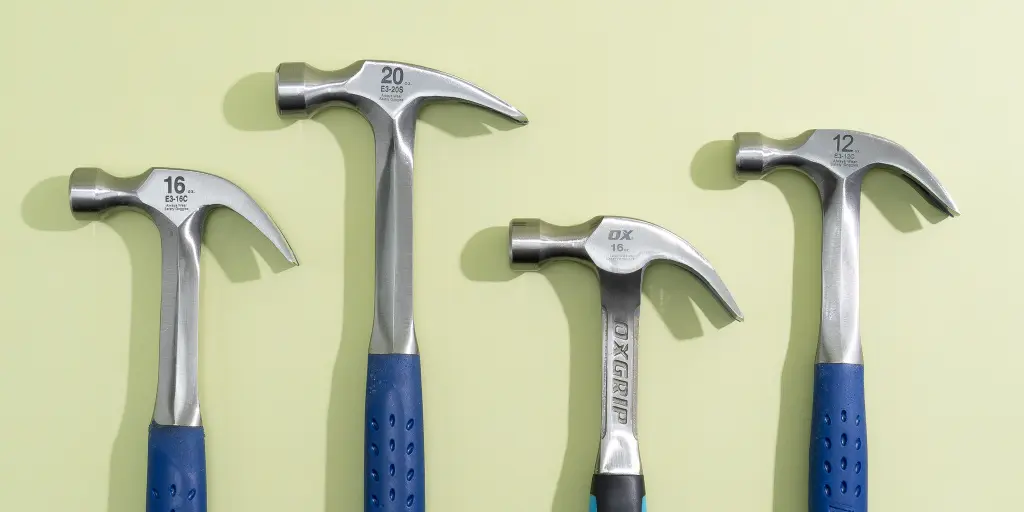
We’ve all been there, standing in the aisles at Bunnings comparing products for way longer than you think you should, confused at the difference between them all and wondering why this one is exponentially more expensive than the other? (Have you ever tried picking a hammer?).
In my experience, you get what you pay for. Anything more expensive than the cheapest is going to be constructed better, be more accurate, more ergonomic, more lightweight, etc. My advice would be, and it’s not ground-breaking, is to consider spending more if it’s on something you see yourself using often (think screwdrivers, measuring tools, garden tools, etc.). Not only will you feel more satisfaction using that tool compared to the cheapie, but it will more than likely do the job better, last a lifetime and be more of a pleasure to use -you’ll actually want to use it.
Don’t get me wrong, there are times when I do go for the budget version, although more often than not it ends in regret and a return trip to Bunno’s to get the one I should have got in the first place. However, if it’s a job that I see myself doing only very infrequently or one that doesn’t require the most perfect result, I weigh it up in my mind and think about how I could buy multiples of this tool for the cost of the more expensive one (e.g. how can this hot glue gun melt glue any different that the other?). Especially in the case where you’re not sure what you want and the cheapest one is significantly less than the rest -just get it and figure out for yourself if it works for you and what you might want it to do better.
It’s up to you and mainly your wallet. But don’t discount the time, enjoyment and overall result that a tool can contribute to.
Organisation is worth every penny
Maybe it’s the Virgo in me, but I’m a sucker for buying tools that come with their own storage or organisation system designed specifically for that item and its accessories. I justify with myself that having this thing being able to be packed away neatly with everything perfectly together is almost always worth whatever the additional price is to get the upgrade. This is not just an unjustified, pedantic or over perfectionist trait though, it comes from many experiences of spending more time looking for my tools than actually doing the job. After starting my toolkit journey with literally a small tool bag before graduating to garage storage boxes with tools, bits and pieces all jumbled and thrown in together, I got sick of pulling everything out every time to find the smallest thing.
While I am one for carefully considering only buying the tools I need, often buying them in a small kit or variation of sizes means that it will come with something to hold them in (eg. a set of nail punches in a nice packet, or a set of router bits in a display case/container). If you can’t do that, consider browsing the storage aisle and for a nice container to do it yourself. At the very least to hold your collection of screws and nails that you will most certainly accumulate very quickly, but also to store and segregate general types of tools/accessories together so that you can spend more time building/fixing than trying to remember that ‘smart’ place you left it last time.
Don’t use your wife’s nice scissors in the garage
A quick note here to say that the jobs you will be using tools for in the garage or workshop are 99% likely to be more abrasive, dirty and hard wearing than normal arts and crafts. Don’t make the mistake I did by choosing the nice sharp kitchen scissors for cutting wool insulation batts -lets just say these scissors are not so sharp now which I am quick to be reminded about. Obviously this advice goes for any household item -save yourself the passive-aggressive scolding and buy a dedicated one for your toolkit.
Batteries, cords or old fashioned manual labour
There is a very important choice that all dad’s must make one day, one that will, consciously or not, express volumes amongst DIYers and tradies what kind of person you are -the brand of power tool and battery platform you decide to commit to!
For the average person, I don’t think you can go wrong with power tool brands. Personally, I’m a Makita guy (not so subconsciously influenced by what I recall my dad using), but Ryobi have a great range at a friendly price point. Even the budget brands like Ozito seem to do a reasonable job. The most important thing to me is simplifying the number and types of batteries you need to keep. If you keep it all on the same platform, your life will be so much easier -just interchangeably pick up the battery with the most charge and off you go.
As for batteries vs. cords, I would suggest that batteries are the way to go for the average dad. Battery technology is awesome these days and with fast chargers, there is minimum downtime. The only reason I would choose a corded variety is if I know I will be using the tool in a single location more often than not, or if it just needs an excess of power that batteries cannot deliver like some saws, or sustain for a long period of time.
There is no doubt that power tools make life much easier. But don’t be quick to dismiss hand tools which can often be just as or even more effective when used in the right way. Often it is more convenient to just cut a piece of timber with a hand saw or use a screwdriver than find all the bits and power and safety gear. There is something romantic about quietly working away with the sound of your hands.
Clothing & safety
It can be tempting to do a little job in your nice everyday clothes but, as usually the case, one thing leads to another and nekminnit you find yourself painting the house or mowing the lawn. Far too many ‘nice’ clothes of mine have turned into not-so-nice clothes sooner than they should have. Everyone keeps a pile of old clothes in the back of the cupboard for dirty work, make sure you use them! Otherwise, if you are frequently working and getting dirty, consider some proper ‘tradie’ clothes designed to last. Not only will they last longer but will have the benefit of special pockets, comfort and reinforcement in the right places.
One last thing. If you value the ability to see, breathe or hear, some type of protection when working is probably a good idea. My theory here is similar again to selecting tools -you are more than likely to want to use them if they are nicer, more durable and quality items. Too many times I curse the $2 glasses I bought that were scratched the day I bought them and fog up immediately, or the flimsy dust mask that I question whether or not actually does anything. Just buy the nice version that will last you ages, fit you perfectly and be a pleasure to use (and keep you healthy!).
What tools to start with
Building out your toolkit doesn’t have to be an expensive, up-front effort. Like collecting art and keepsakes, it can be more purposeful and digestible if you build it up over time buying as and when you need. If I had to start over again, here are the tools I would start with to tackle most jobs around the house.
- Screwdrivers
- Pliers
- Adjustable wrenches
- Allen keys
- Claw hammer
- Cordless Drill
- Drill bits
- Hand saw
- Tape measure
- Combination square
- Spirit level
- Marking tool
- Knife
- Scissors
- Tool storage
- Safety glasses
- Earmuffs
- Portable work bench (optional bonus!)